
WHY DOES MY EVAPORATIVE COOLER STRUGGLE ON A REALLY HOT DAY?
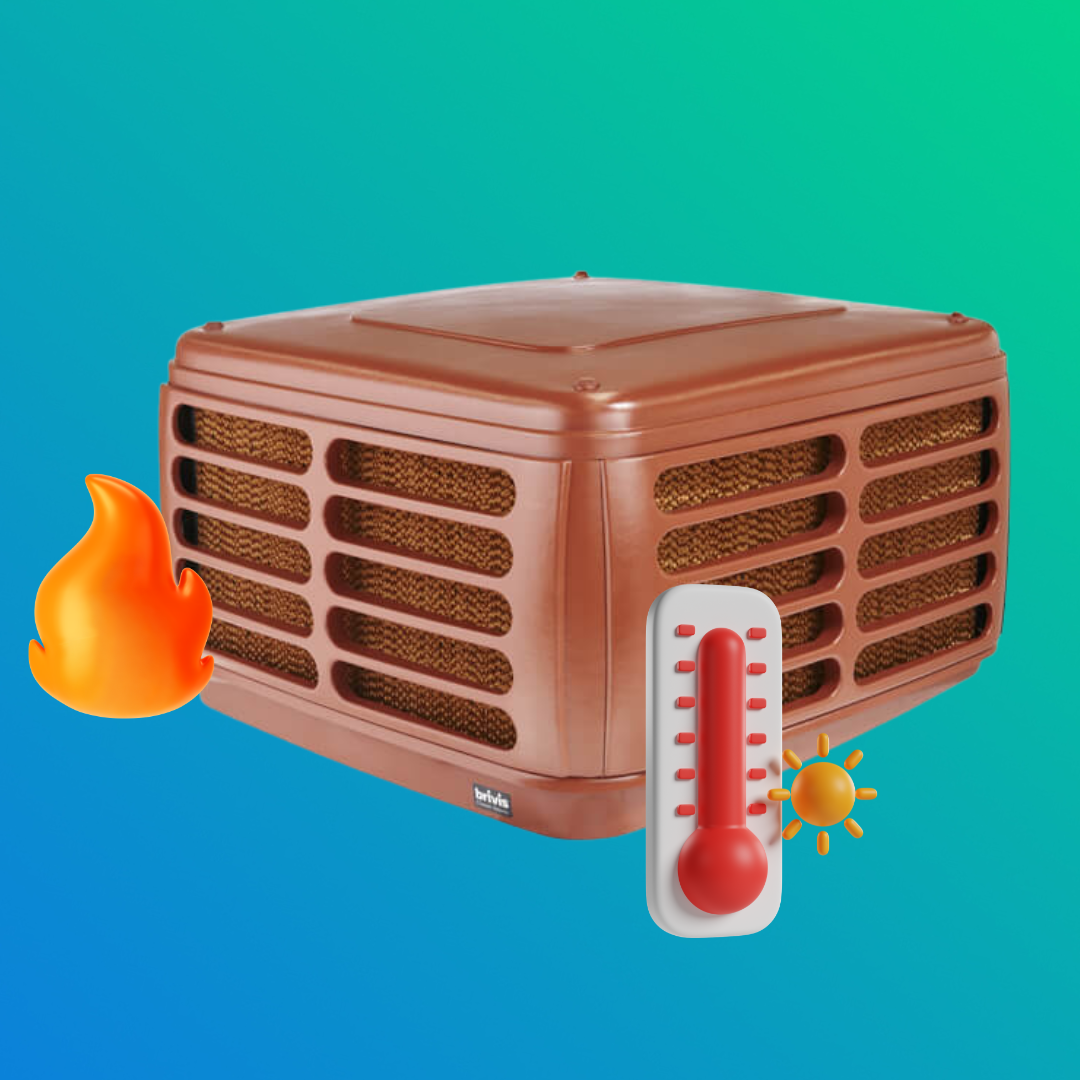
If you have evaporative cooling, you might have noticed that it can feel fantastic on a typical dry summer day in Bendigo, but struggle when the temperature really starts climbing.
So, why does your evaporative cooler sometimes seem to give up when you need it most?
The answer comes down to how evaporative cooling works — and understanding how air needs to move through your home.
How does evaporative cooling work?
An evaporative cooler works quite differently to refrigerated air conditioning.
Instead of using refrigerant to cool the air, an evaporative cooler draws warm outside air into the system and passes it over water-saturated cooling pads.
As the warm air moves through the wet pads, some of the water evaporates. This evaporation removes heat from the air, producing cooler, fresher air which is then distributed throughout your home.
It's a simple and effective process, particularly in Bendigo's generally dry summer climate.
But there's an important part of the process that homeowners sometimes overlook.
The air needs somewhere to go.
Why do I need to leave a window open?
If you've ever been told to leave a window or door slightly open when using evaporative cooling, there's a very good reason for it.
Your evaporative cooler is continuously pushing fresh, cooled air into your home.
That air needs to be able to move through the house and eventually escape.
If every window and door is closed, the pressure inside the house increases. This makes it harder for the cooler to continue bringing fresh outside air into the home and circulate it effectively.
Think of it like this:
Cool air comes in → warm air needs to get out.
Leaving a window or door slightly open provides somewhere for the air to escape and allows the cooler to keep doing its job.
It's a little bit like letting the hot air out to make room for the cooler air.
How much should I open my windows?
You don't need to have every window in the house wide open.
The aim is to create enough airflow for the cooled air to move through the home and escape.
In many homes, this means opening windows or doors slightly in the rooms you're cooling. You may need to experiment with different windows to find what gives you the best airflow through your particular home.
The layout of your house, the location of the vents and the direction of airflow can all affect how well the cooled air moves through the space.
If you're unsure whether your evaporative system is operating correctly, it's worth having it checked rather than simply opening more and more windows.
So why does my evaporative cooler struggle on really hot days?
This is where the difference between evaporative cooling and refrigerated air conditioning becomes particularly noticeable.
Evaporative cooling relies on evaporation to remove heat from the air.
The effectiveness of that process depends on the conditions outside.
Bendigo's generally dry climate makes it well suited to evaporative cooling for much of the summer. However, when temperatures become extremely high, there is simply more heat for the system to deal with.
On particularly hot days, you may find that your evaporative cooler is running continuously but the air coming into your home doesn't feel as cool as it normally does.
That's not necessarily a sign that your system has stopped working.
It may simply be reaching the limits of what evaporative cooling can achieve under those conditions.
What about really hot days?
When the temperature outside reaches the high 30s or beyond, an evaporative cooler may not be able to bring your home down to the same temperature you could achieve with refrigerated air conditioning.
That's because the two systems cool air in fundamentally different ways.
A refrigerated air conditioner removes heat from the indoor air using a refrigeration cycle, while an evaporative cooler relies on the evaporation of water to cool incoming outside air.
So while evaporative cooling can be an excellent option for Bendigo's typical dry summer conditions, refrigerated cooling can provide more consistent temperature control when you're dealing with extreme heat.
Does humidity make a difference?
Yes.
Evaporative cooling works best when the air is relatively dry because dry air has a greater capacity to absorb moisture.
When humidity is higher, there is less capacity for additional water to evaporate from the cooling pads. This can reduce the amount of cooling the system can achieve.
That's another reason you may notice a difference in performance depending on the weather conditions, even when the temperature is similar.
A hot, dry day can be much more favourable for evaporative cooling than a hot, humid day.
How can I get the most from my evaporative cooler?
There are a few simple things you can do to help your evaporative cooler perform as well as possible.
Keep windows open correctly
Don't close the house up completely. Your system needs somewhere for the air to escape.
Make sure vents aren't blocked
Furniture or other objects positioned directly underneath or around vents can interfere with airflow.
Start cooling before the house gets extremely hot
Getting ahead of the heat can help your system maintain a more comfortable indoor temperature rather than trying to cool a home that has already absorbed hours of heat.
Keep the system maintained
Dirty cooling pads, filters or other components can affect airflow and performance.
Regular maintenance can help your evaporative cooler operate as effectively as possible throughout summer.
Should I replace my evaporative cooler with a split system?
Not necessarily.
Evaporative cooling has some real advantages, particularly in a dry climate like Bendigo. It provides fresh air throughout the home and can be an effective and economical cooling option under the right conditions.
But if you're finding that your home regularly becomes uncomfortable during extreme heat, it may be worth considering whether refrigerated air conditioning would better suit your needs.
A split system can provide more precise temperature control and doesn't rely on opening windows to operate.
For some homeowners, the best solution may even be a combination of systems, depending on the home and how the different spaces are used.
The right choice comes down to your home, your budget and the type of comfort you're looking for.
When your evaporative cooler isn't keeping up
If your evaporative cooler is struggling on a particularly hot day, it doesn't automatically mean there's a fault.
Extreme temperatures can push any cooling system harder than normal, and evaporative cooling is particularly dependent on the conditions outside.
However, if your system has suddenly stopped performing as it normally does, airflow seems weak, you're noticing unusual noises or it's struggling even in conditions where it previously worked well, it's worth having it inspected.
There could be a maintenance issue or fault affecting its performance.
At Holloway Air & Electrical, we service, repair and install evaporative cooling systems across Bendigo and surrounding areas. We can also help you compare evaporative and refrigerated cooling options if you're considering an upgrade.
Not sure whether your evaporative cooler is keeping up or if it's time to consider another option? Get in touch with the Holloway Air & Electrical team.